
Sicily as one trip, not nineteen reservations
A two-week anniversary road trip worked because the route, hotels, ferries, parking, food, beach time, and breathing room were planned together — not one booking at a time.
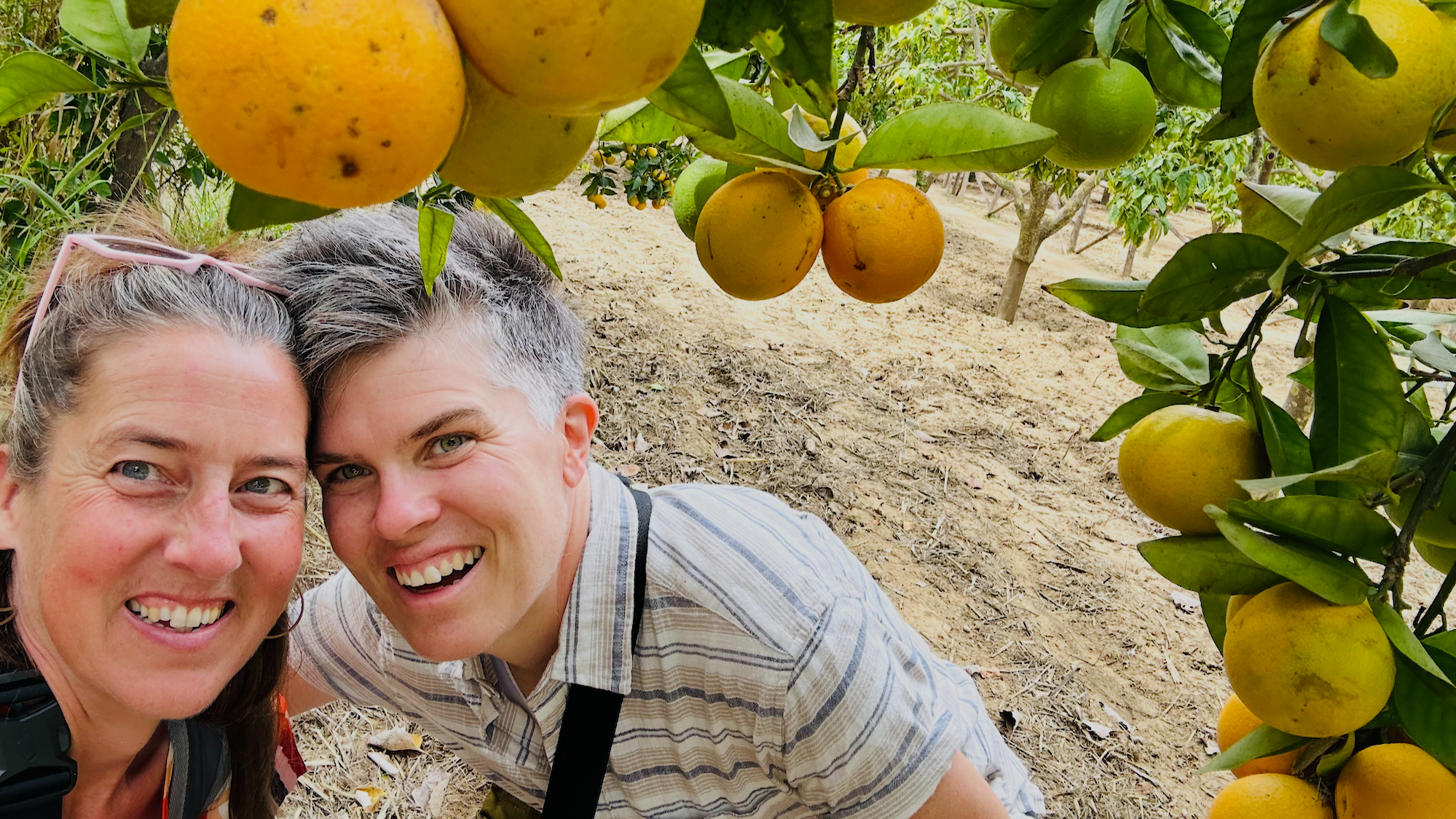
The brief had a lot in it — on purpose.
Briggs and Sonja were celebrating their anniversary with about two weeks in Sicily. They wanted the trip to feel varied: cities and small towns, rural landscapes and the coast, food and wine, museums, time on the water, maybe some hiking, and enough flexibility that every day did not feel pre-scripted.
They also wanted the lodging to change with the trip. A beautiful resort could be worth a splurge in the right place; somewhere else, a smaller character-filled stay or agriturismo made more sense. The goal was not to make every stop equally luxurious. It was to make each stop feel right for that part of the journey.
That is the kind of brief where the hard part is not finding nineteen good things to reserve. It is deciding how they should fit together.
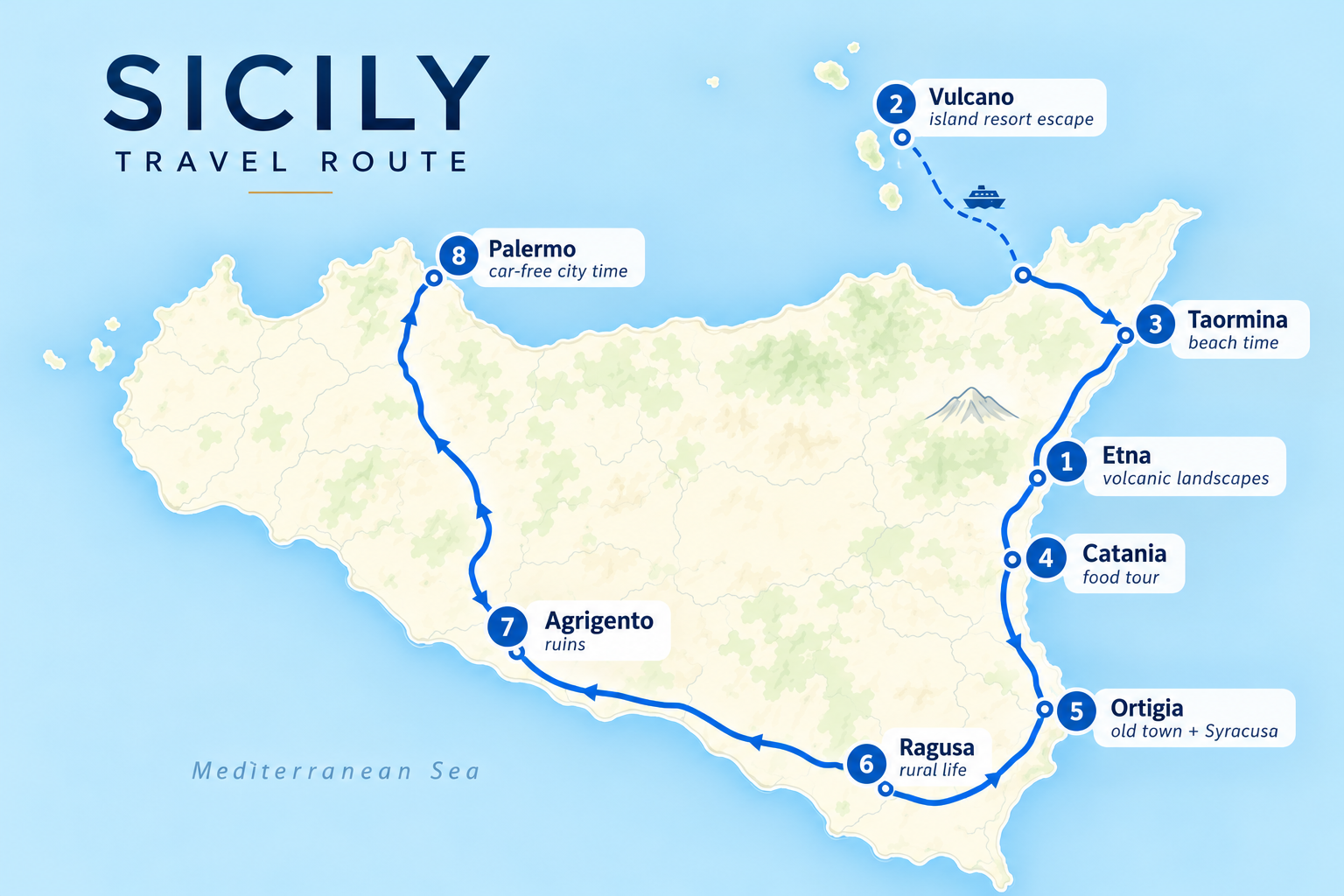
The route mattered as much as the reservations
The smartest decision wasn’t any single place. It was getting the shape of the trip right first. Each stop needed to contribute something different, and the sequence had to keep the trip moving without making transiting feel like the point.
That meant less backtracking, fewer logistical headaches, and a trip that kept unfolding — countryside, an island escape, beach time, food, history, rural Sicily, and finally a car-free city finish.
The route sets up everything that comes after.
Sicily rewards ambition. That is also the trap. It is easy to look at a map, keep adding places, and accidentally turn a trip into a daily exercise in packing, driving, parking, and checking in, leaving precious little time for the actual vacation.
So we established the major beats before filling in the details. Flying into Catania and home from Palermo avoided unnecessary backtracking. From there, every later decision inherited the route: which hotel made sense, when they needed the rental car, when they absolutely did not, which tours could fit naturally, and where an extra night would buy more than another pin on the map.
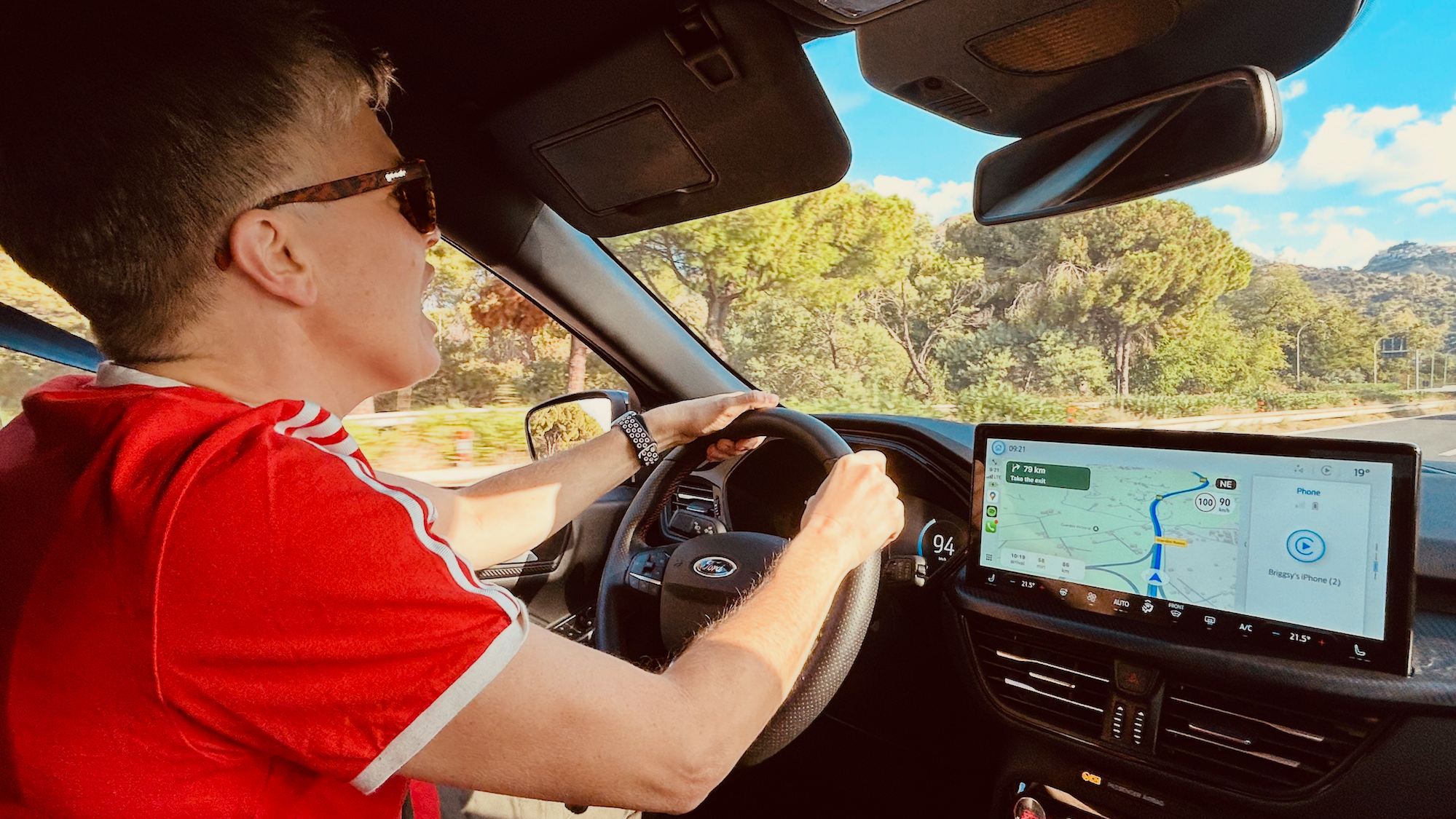
The unglamorous details are often the ones holding the trip together.
A Sicilian road trip is not only about driving. It is about knowing what to do with the car when you’re not behind the wheel.
For the Vulcano stay, that meant arranging a spot at a lot in Milazzo, getting from there to the port, taking the fast ferry to the island, and knowing how the resort shuttle on the other side worked. In Ortigia, it meant sorting out nearby parking and the vehicle declaration needed for access to the historic center without a fine. In Palermo, it meant returning the rental car before the final city stay instead of dragging parking stress into two days when the car no longer served them.
None of those choices belongs on anyone’s bucket list. Together, they are the reason the bucket-list parts can feel easy. And I worked out the step-by-step instructions so they didn’t have to make it up on the fly.
A transfer day can still be a meaningful part of the trip.
One of my favorite examples was Catania. Briggs and Sonja did not need another hotel there just to experience the city. We placed a small-group street-food tour around midday as they moved from Taormina toward Ortigia.
That turned what could have been a pure logistics day into arancini, pastries, cafés, and a few hours of Catania — without adding another unpack/repack cycle.
The same principle shaped other legs. Rather than treating the hours between hotels as dead time, I mapped worthwhile stops that could break up the route when they made sense — including the Scala dei Turchi on the way toward Agrigento. Good sequencing is not always about doing less. Sometimes it is about making the things you want to do sit more naturally inside the route.

Spend where the experience changes. Save where it doesn’t.
The lodging mix was deliberately uneven. Therasia Resort on Vulcano and La Plage in Taormina were the obvious “this is the anniversary trip” stays. Other stops leaned smaller, more rural, or more boutique.
That is usually more interesting to me than forcing one price point or hotel category across an entire itinerary. A splurge earns its keep when the property itself changes the experience: the setting, the access, the service, the time you want to spend there.
La Plage is a good example. Its location at Isola Bella was not just a nice view from the hotel. After the trip, Briggs and Sonja specifically remembered being able to get to the beach early, before the crowds arrived, as one of those almost-magical travel moments.
Plan the important things. Leave some things unplanned on purpose.
There were guided experiences that were worth locking in: food tours, the Valley of the Temples, a boat around Ortigia, and other experiences they specifically cared about.
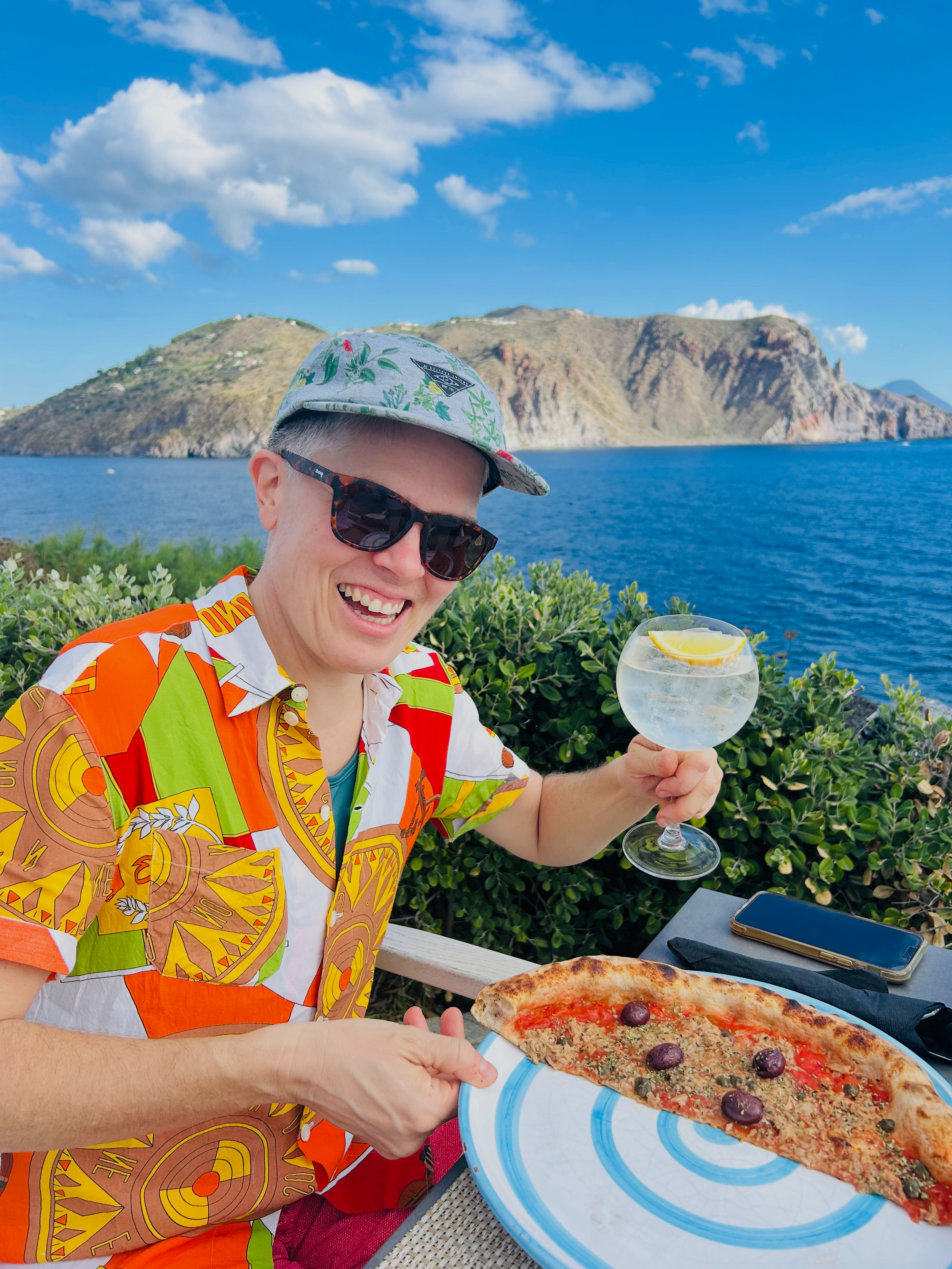
But we did not fill every open space just because something was bookable. On Vulcano, for example, there was value in leaving room to see what the weather looked like and what the resort could arrange locally rather than turning a resort stay into another checklist.
Palermo worked the same way in a city context. Instead of slotting in every museum, market, church, and neighborhood stop, I gave them a curated menu of possibilities they could dip into depending on how they felt on the day. They still had useful ideas at hand without having to obey a schedule.
That balance was part of the original brief: structure without suffocation. The itinerary should do enough work that you are not constantly solving logistics on vacation, while still leaving room for Sicily to interrupt the plan.
The backup file was long. The trip didn’t have to feel complicated.
Behind the simple itinerary Briggs and Sonja actually used, sat nearly 100 pages of backup documentation: confirmations, parking instructions, ferry details, tour vouchers, optional ideas, and the rest of the travel plumbing. That was of course not 100 pages I expected them to read.
They could see the trip from the 30,000-foot level and day-by-day in a straightforward itinerary available in an app or any web browser. The longer file was there when a confirmation number, parking instruction, or other detail was needed — more organized filing cabinet than travel manual. That distinction is the point. The complexity belongs in the planning and the backup, not in the traveler’s head.
The best evidence that the scaffolding stayed in the background is what Briggs and Sonja talked about afterward: the hotels, the food experiences, and those quiet moments at the beach — not the ferry connection or where they parked the car. Their review of the trip also praised the logistics, but in service of the larger point: the planning made the trip “so much better.”
One trip, not a pile of bookings.
Almost every reservation in this itinerary could have been researched and booked independently. But that was never going to make for an enjoyable experience.
The value was in making the reservations answer to the same trip: a road trip with range, a few well-placed splurges, excellent food, time to wander, practical logistics that did not become the travelers’ problem, and enough breathing room for an anniversary trip to still feel like a vacation.
That is the difference between assembling travel and planning a trip.
Want the practical version of how I plan?
See how the planning process works — from the big decisions to the connective tissue that makes the trip hold together.
