
HOW IT WORKS
Start with the trip. The itinerary comes second.
Before I recommend a hotel, a route, a tour, or the restaurant you absolutely have to try, I want to understand what the trip is supposed to do for you: what matters, what doesn’t, what would make it feel successful, and what constraints we need to respect. Then we build outward from there.

I ask “why?” before I ask “which hotel?”
A honeymoon, a family homecoming, a week to decompress, and a milestone birthday can all happen in the same destination and still need completely different trips. The useful starting point is not a list of things to book. It’s understanding what you’re actually trying to accomplish.
That habit comes directly from my strategic communication background: objective first, tactics flow from there. Once we know the objective and parameters, we have something useful to calibrate against. Is the itinerary getting too ambitious? Is the splurge worth it? Do you want another guided day or room to wander? Is the default destination actually the right one?
The payoff is coherence.
Hotels, pacing, transportation, experiences, budget, and free time stop being separate decisions and start working together as one trip.
ONE TRIP, NOT A PILE OF RESERVATIONS
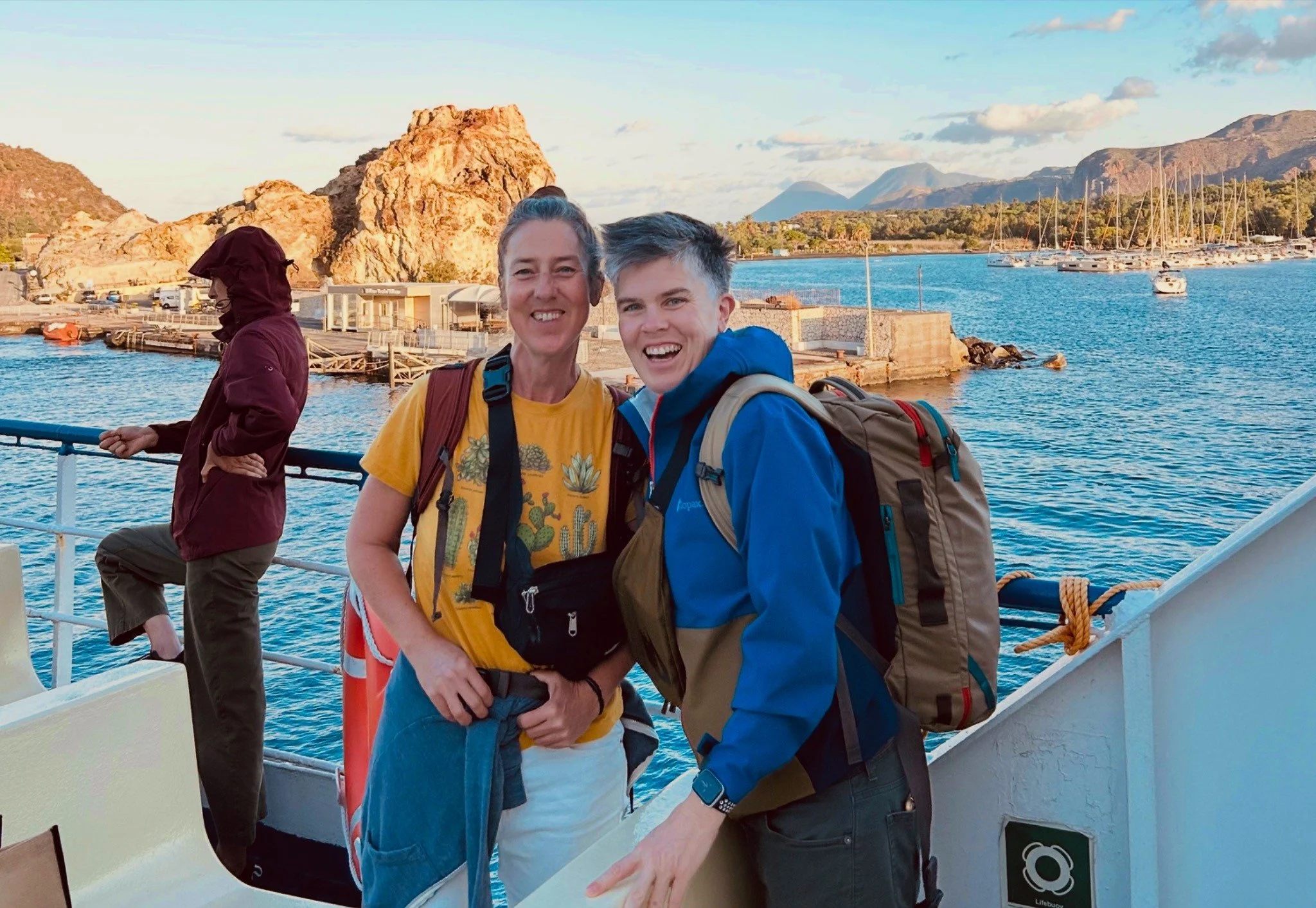
For Briggs and Sonja’s anniversary road trip through Sicily, the work wasn’t simply finding good hotels and tours. It was designing the route so the driving days, ferries, parking, places to linger, splurge decisions, food experiences, and unscheduled time all supported one another. Any one of those reservations could have been made independently. The value was that they were designed together.
Big decisions first, then we zoom in.
My planning usually moves from the choices with the biggest ripple effects toward the finer details. That is deliberate: it’s much easier to pick the right hotel once we know the route, or the right tour once we know how much time you’ll have in a place. We can change course when something new surfaces, but the process is designed to avoid chicken and egg dilemmas or rebuilding the whole trip every time a smaller decision changes.
1 / UNDERSTAND
What matters, who is traveling, budget, preferences, constraints, must-dos, and the reason for the trip.
2 / SHAPE
Build the shell: destination, dates, routing, pacing, and the major contours. Decide what belongs — and what does not.
3 / CALIBRATE
Fine-tune lodging, experiences, guided vs. independent time, pre-booked vs. spur of the moment, splurge vs. save, together vs. apart, and the tradeoffs between them.
4 / COORDINATE
You make the meaningful choices. I coordinate the agreed pieces, manage supplier communication, and keep the whole picture aligned.
5 / PREPARE
Reconfirm where it matters, organize the particulars, flag what you need to know, and make sure you have easy access to contacts and important details.
FLEXIBLE DOES NOT MEAN GOING IN CIRCLES
If a genuinely better option appears or priorities change, of course we’ll adjust. But the reason I start with the big picture is to surface the decisions with downstream consequences early. The goal is a process that keeps moving forward — not an endless loop of drafts.
SCOPE + FEES, UP FRONT
Before the deep work, we agree on the scope.
The first conversation is just a conversation. If the trip calls for substantial planning, I’ll outline my approach, the expected timeline, and any planning fee before I dive in. If the need is straightforward, we can keep the process straightforward too.
Planning should build excitement, not drain it.
You stay the decision-maker. I take on the research, comparison, follow-up, and coordination that can turn anticipation into administration. My job is to bring you the choices that are actually worth making, explain the tradeoffs, and give you a point of view.
Some clients want to be deeply involved in every hotel and experience. Others give me a broad brief and would rather react to a thoughtfully narrowed set of recommendations. Most land somewhere in between. Using an advisor does not mean giving up the parts of planning you enjoy.
“Michael was so patient and regularly checked in to give us the push we needed to make decisions! Planning… can be overwhelming, but Michael helped to reduce that stress!”
— Crystal, family trip to London + Dublin
Plan enough that you can stop thinking about the plan.
JUST ENOUGH PLANNING
I’ve always liked the idea of “just enough planning:” rigorous enough that the important pieces are handled, but not so rigid that the trip cannot breathe. Before departure, I reconfirm the pieces that warrant it, organize the useful information, flag anything you need to know, and make sure the practical handoffs make sense.
The goal is not an hour-by-hour script. It is to do enough thinking in advance that, once you are there, you can have the long lunch, wander into the market you did not know existed, change your mind about the afternoon, or simply stop looking at your phone.
SUPPORT THAT GETS YOU TO THE FASTEST SOLUTION
I make sure you leave with confirmation numbers, supplier contact information, and clear instructions for the parts of the trip that may need them. If something simple goes sideways while you are traveling, the hotel, driver, tour operator, or local partner in front of you can often fix it faster than I can from several time zones away. I never want to be the roadblock between you and the resolution you need in the moment.
The point is that you’re not on your own. I remain a resource for booking or supplier issues and an advocate when my involvement can help. On some trips, I may recommend working with someone who can be an on-the-ground partner. I’ll always send you out prepared, with the right people reachable and with me in your corner when I am that useful person to involve.
Questions? Good.
The process is flexible, but a few practical questions come up a lot. Open whatever is useful; ignore the rest.
-
Whatever you know. A destination, dates, budget, an occasion, a hotel you already love, a rough idea, a very detailed brief, or simply “we need a vacation and have no idea where” are all useful starting points. I may ask about past trips, priorities, who is traveling, and what would make this one feel successful — but there is no homework assignment before we talk.
-
Start a conversation in whatever way is easiest: send a short note, email or text me, schedule a conversation, or fill out a Trip Request if you already have a reasonable idea of what you’re thinking. There is no fee just to talk. If I think the trip calls for substantial planning, I will define the scope, timing, and any planning fee before the work begins.
Contact me
-
Some trips require meaningful research, itinerary design, and coordination, so I charge a planning fee when the scope warrants it. After we talk, I will tell you what I propose to do and what it will cost before I begin substantive planning. Many straightforward bookings do not require a planning fee, and there is no fee to use my self-service hotel booking tool. I also earn commission from many travel suppliers when you book through me which is part of how I’m compensated for my time. An ordinary question does not start a meter.
-
Absolutely. Sometimes it is the smartest answer, and sometimes you simply enjoy handling a piece yourself. If I am planning the broader trip, the main thing is coordination: tell me before you lock in something that affects routing, timing, or other reservations so I can make sure the pieces fit. For straightforward hotel bookings, I also have an advisor-connected self-service option that lets you browse and book while keeping me available for advice.
-
Yes. When it comes to earning, tell me what loyalty programs or credit-card rewards matter to you so we can factor them into the trip. For using rewards, I can help think through where points or miles may be most valuable and plan around award bookings you make yourself.. The best strategy depends on the trip; points do not need to be an all-or-nothing proposition.
-
Yes — in many cases I can ticket airfare through my agency or a partner, and air is an increasingly regular part of my work. There are still times when booking directly with the airline or using points is the better answer, and I will say so. I can also advise on routing, timing, cabin choice, and how the flights fit the larger trip. If an air-ticketing fee applies, I will tell you before I book.
-
Yes. The useful starting point is the traveler’s actual needs, not a generic label like “accessible.” I can help surface those requirements early, ask specific questions of hotels, cruise lines, tour operators, and other partners, and make sure everything is communicated before you travel. If something calls for expertise or guarantees I can’t responsibly provide, I’ll say so and help identify the right resource.
-
Good support starts before departure. I give you the confirmation details and supplier contacts you need so the person best positioned to fix a simple in-the-moment issue can do it quickly — without making you wait for me from another time zone. I am still a resource for booking or supplier problems and can advocate when my involvement is useful. Some trips might also include a local partner who can provide 24/7 on-the-ground support.
-
No. I care much more about fit than a price tier. A trip can pair a splurge hotel with a simple apartment, private touring with a day on your own, or one exceptional meal with plenty of casual ones. The useful question is where spending more changes the experience, and where it does not.
-
Yes. I often support individual business trips — hotels, flights, and the leisure time you may want to add around the work — as well as select small organizational trips, retreats, and board travel. Argyle is not a high-volume corporate travel-management platform, so if that is what you need I will point you in the right direction.
-
Airbnb itself does not work with travel advisors, but a short-term rental can absolutely be the right fit for a trip. I can source rental-style accommodations through many of my partners like VRBO, Plum Guide, and others where available, help compare a rental with hotel options, or plan the rest of the trip around an Airbnb you book yourself. If substantial rental research is part of the work, it will be included in the planning scope we agree on.
-
Sometimes. For a fuller planning engagement, I can recommend restaurants and help with selected reservations or other small trip details when that is part of the agreed scope. Because restaurant reservations often involve last minute changes that I’m not poised to manage, I often point clients to a hotel concierge or local partner — or give you recommendations and let you book them directly. I try to direct my time to where it adds meaningful value rather than getting that deep in the weeds all the time.
-
Yes. You can either work with me to plan a trip that you present as the gift, or cover a planning fee and let the recipient collaborate with me on the details. If the surprise is part of the fun, I can help think through how much to decide before you hand it over.
-
The labels overlap. I use “travel advisor” because making a booking is only one part of what I do: I help shape the trip, recommend and compare options, coordinate the pieces, and bring a point of view. But if all you need is a booking handled well, that can be a perfectly good reason to work with me too.
-
Fora is my host agency — essentially the industry infrastructure behind Argyle. It provides booking systems, supplier relationships, agency credentials and support, and a network of fellow advisors I can tap for additional knowledge and expertise. Argyle Experiences is my independent advisory business, and I am your advisor. You may see Fora in my email address, on booking confirmations, or in some of the booking tools I use, but your relationship is with me.
When does the fun part start?
Right here, ideally. Tell me what you are thinking about, and we can start turning the idea into something you will actually look forward to — including the planning itself.
Already know the details?
Request a trip ⇗