
4 Gays with 8 Days in Morocco
A very specific eight-day trip through Morocco, with the places, choices, surprises, and detours that made it ours rather than a generic “best of” itinerary.
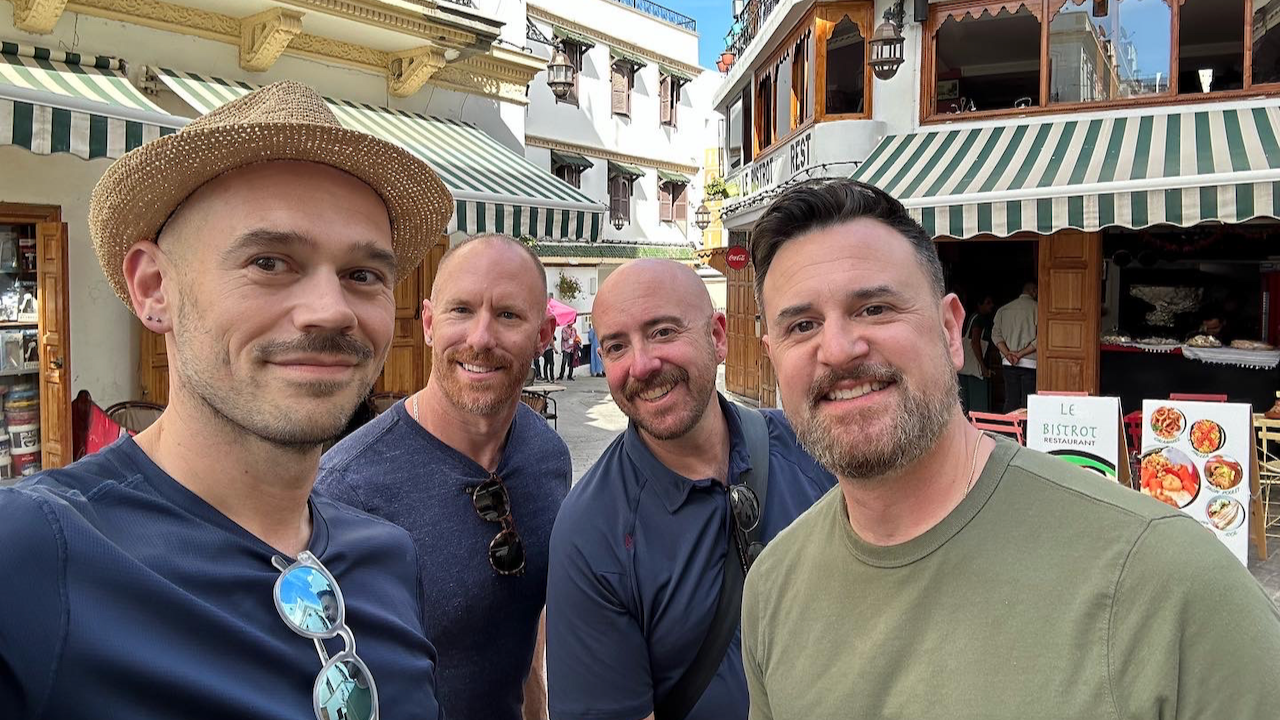
Morocco had long been a bucket-list destination for my husband and me: the food, the landscapes, the markets, the history, the culture. So when a friend’s 40th birthday took us to Paris, we knew exactly where we wanted to go next. We cajoled two of our favorite travel companions into joining us.
This trip predates my travel-advisor career, but in hindsight it already looked a lot like how I still like to travel: enough structure to make the complicated parts work, and enough room for detours, wandering, and surprises.
There was one extra layer. Gay sex remains criminalized in Moroccan law. We were not going to make that the only lens through which we saw the country, but we also were not going to pretend it was irrelevant. We paid attention to where we stayed, how we moved around, and where having a private guide made the trip easier.
Day 1: Tangier
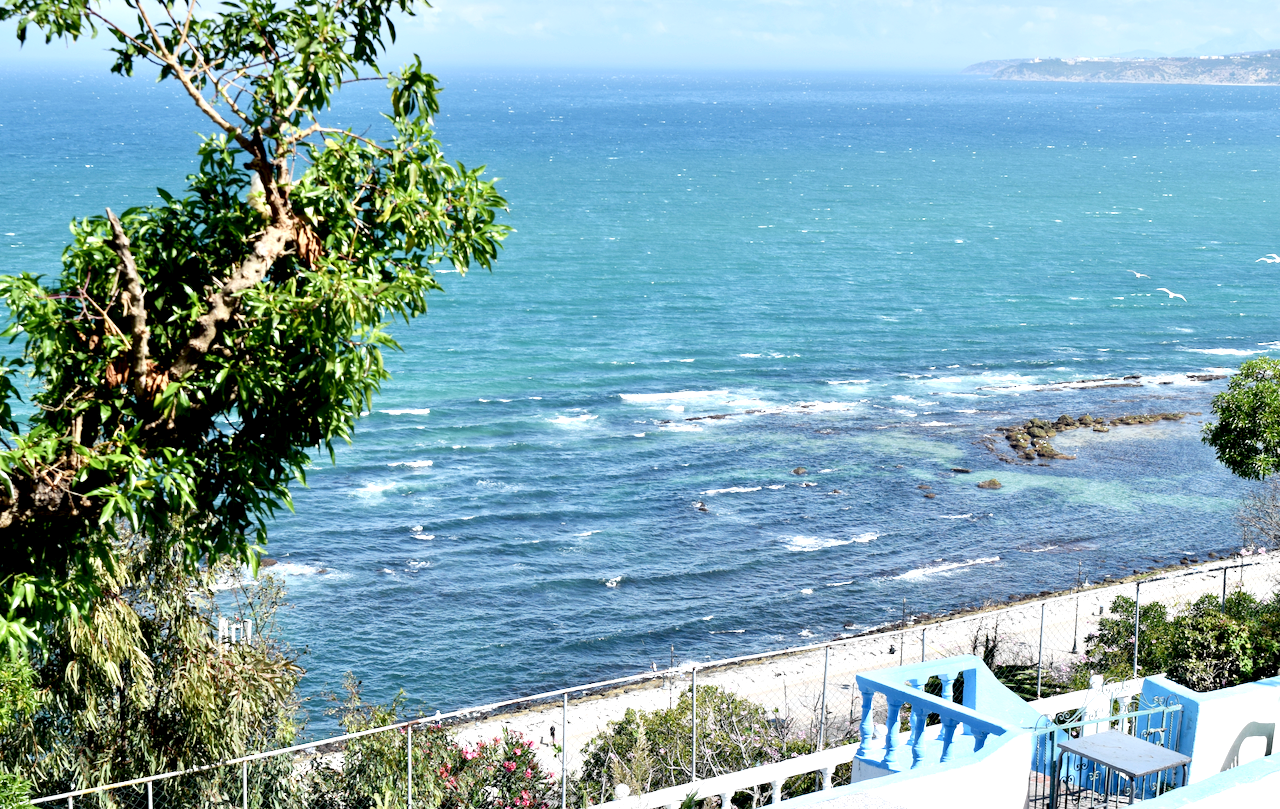
After a late-night arrival and some sleep, we set out on foot. Tangier is one of those places where the geography explains a lot: the Mediterranean meeting the Atlantic, Europe visible across the Strait, and centuries of people trading, clashing, passing through, and settling in. It still has a little edge to it, which made more sense once I learned about its years as an international zone and its later appeal to artists, writers, and hippies.
We wandered through the Kasbah, visited the Kasbah Museum of Mediterranean Cultures and the small-but-compelling Contemporary Art Space, then took in the Strait of Gibraltar from the old tombs above the water before stopping at buzzy Café Hafa, perched on the cliffs above the water.
Two meals still stand out. At Abou Tayssir, a tiny Syrian restaurant, the food felt almost literally home-cooked (which was confirmed when we saw them bringing dishes down the tiny back staircase from what I think may have actually been the family residence above). Dinner at Le Saveur du Poisson was another interesting experience: a famously no-frills, fixed-menu seafood institution where you eat what arrives and keep going until they stop feeding you. Both were exactly the sort of places I hope to stumble into when I travel.
Day 2: Chefchaouen
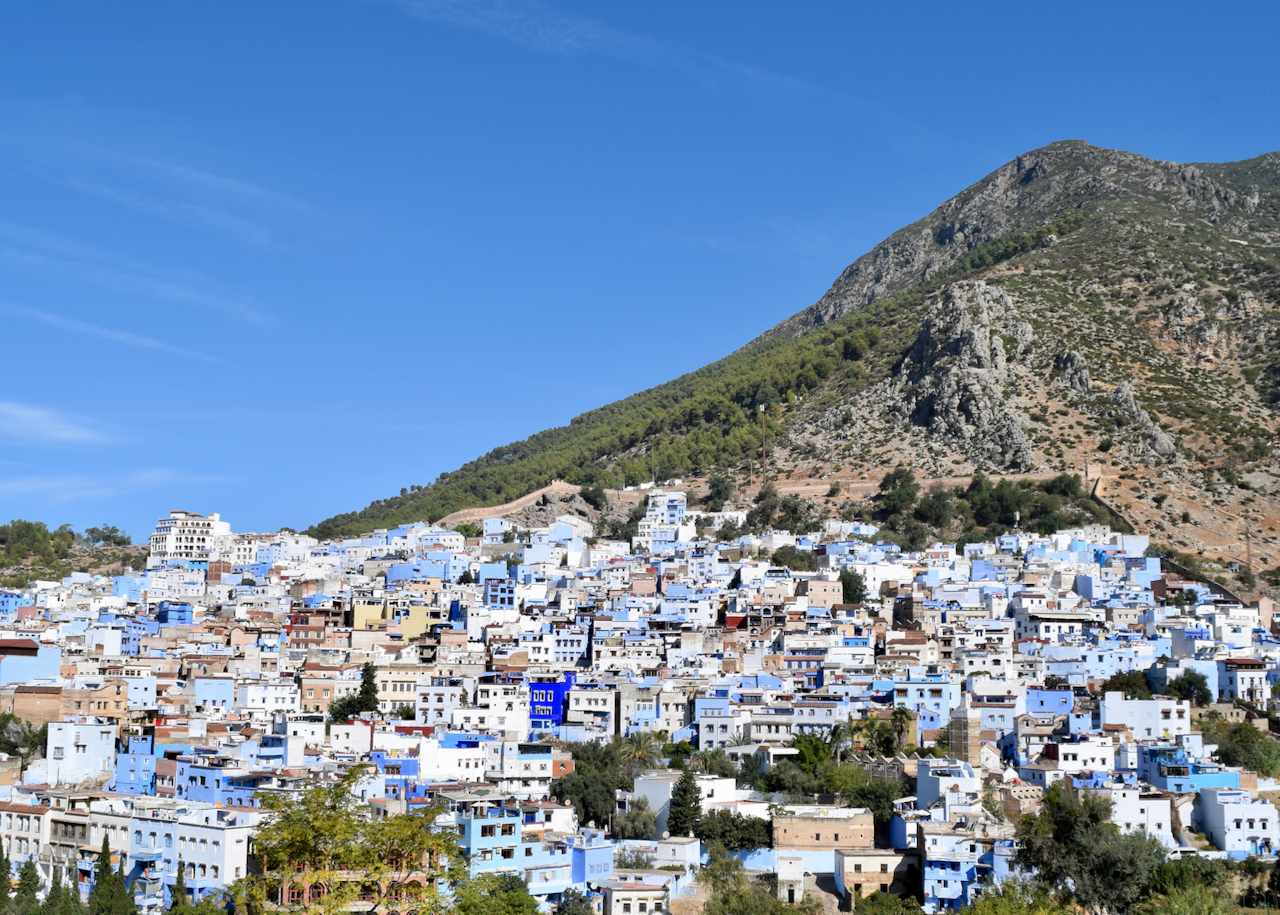
If you are already in northern Morocco, Chefchaouen earns the detour. We booked a private driver and guide from Tangier and spent much of the day trying to keep up with a guide nearly twice our age.
The blue-washed alleys are every bit as photogenic as advertised — talcum blue painted on what feels like everything — but the private guide made the day feel like more than an Instagram stop. Back in Tangier, we worked our way through nearly the entire small-plate menu at Alma Kitchen and ended the night by the pool at the Grand Hotel Villa de France.
Day 3: Marrakech by train
We took Morocco’s Al Boraq high-speed train from Tangier to Casablanca, then connected to the conventional train onward to Marrakech. The first leg was smooth and comfortable; the second was considerably less glamorous — cramped, with toilets that appeared to open directly to the tracks below, and this was in “first class.” Still, I liked seeing the country from the rails rather than defaulting to another flight.
That evening, a street-food tour gave us our bearings in Marrakech in the best possible way: walking, eating, and learning the geography of the medina as we went.
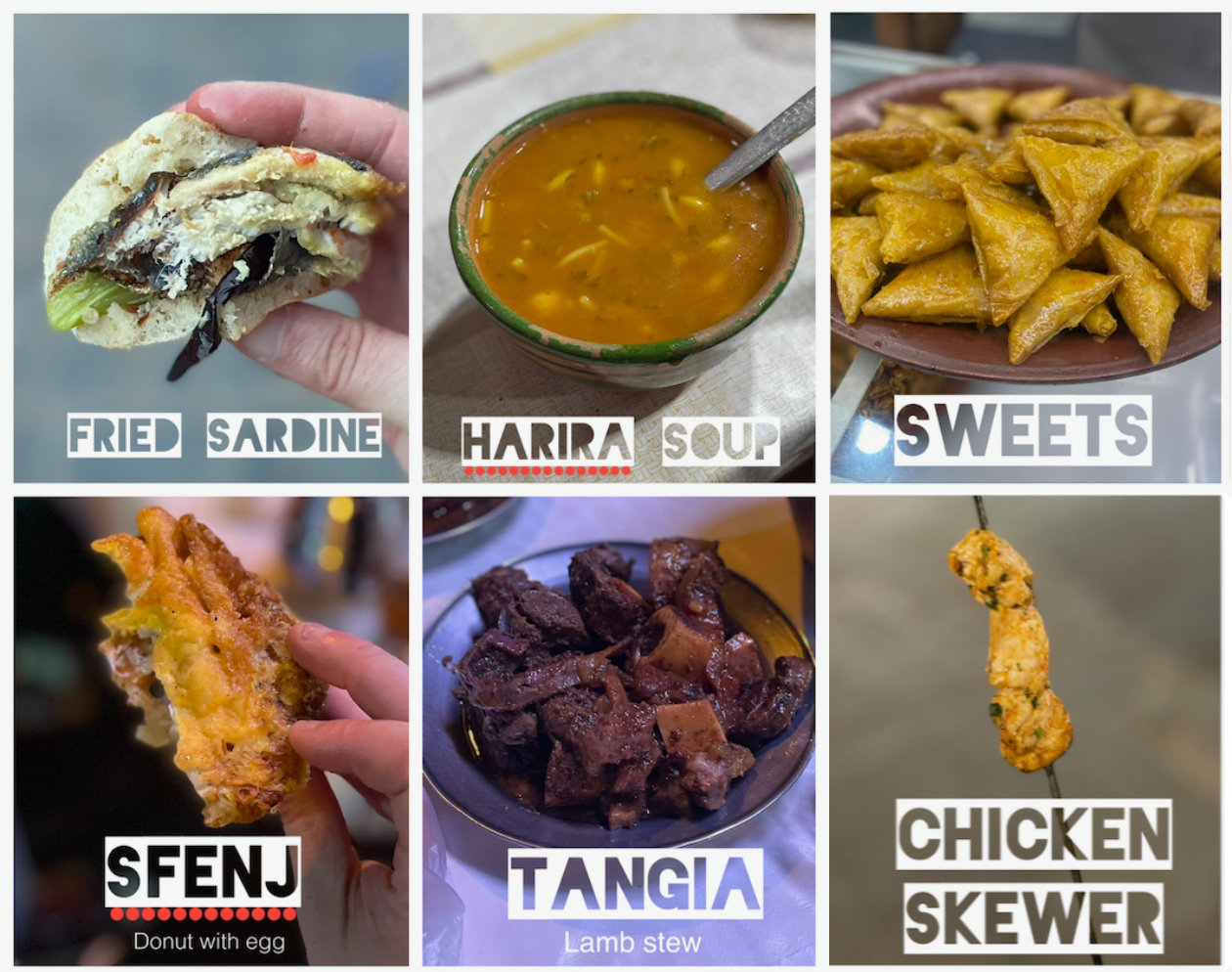
Treats we savored on our Marrakech street food tour
Day 4: The Marrakech greatest hits — with some editing
We did the Jardin Majorelle first thing. I would absolutely still book that in advance; the official site sells timed tickets online, and this is not the place to rely on showing up and hoping. We followed it with the Musée Yves Saint Laurent Marrakech, which I enjoyed, though if your time is tight, I would prioritize the garden.
Lunch was at L’Mida, the first of a couple of stops because it was that good. I still remember the rooftop views and contemporary Moroccan food, but also just how much we liked being there. We spent the afternoon doing absolutely nothing by the riad pool, then had dinner at Nomad above the medina — tagine, lamb chops, and another meal we were very happy to linger over.
That combination — one or two things we had deliberately planned, followed by several hours with nowhere we needed to be — was exactly right.
Day 5: Shopping, bargaining, and a nightlife experiment
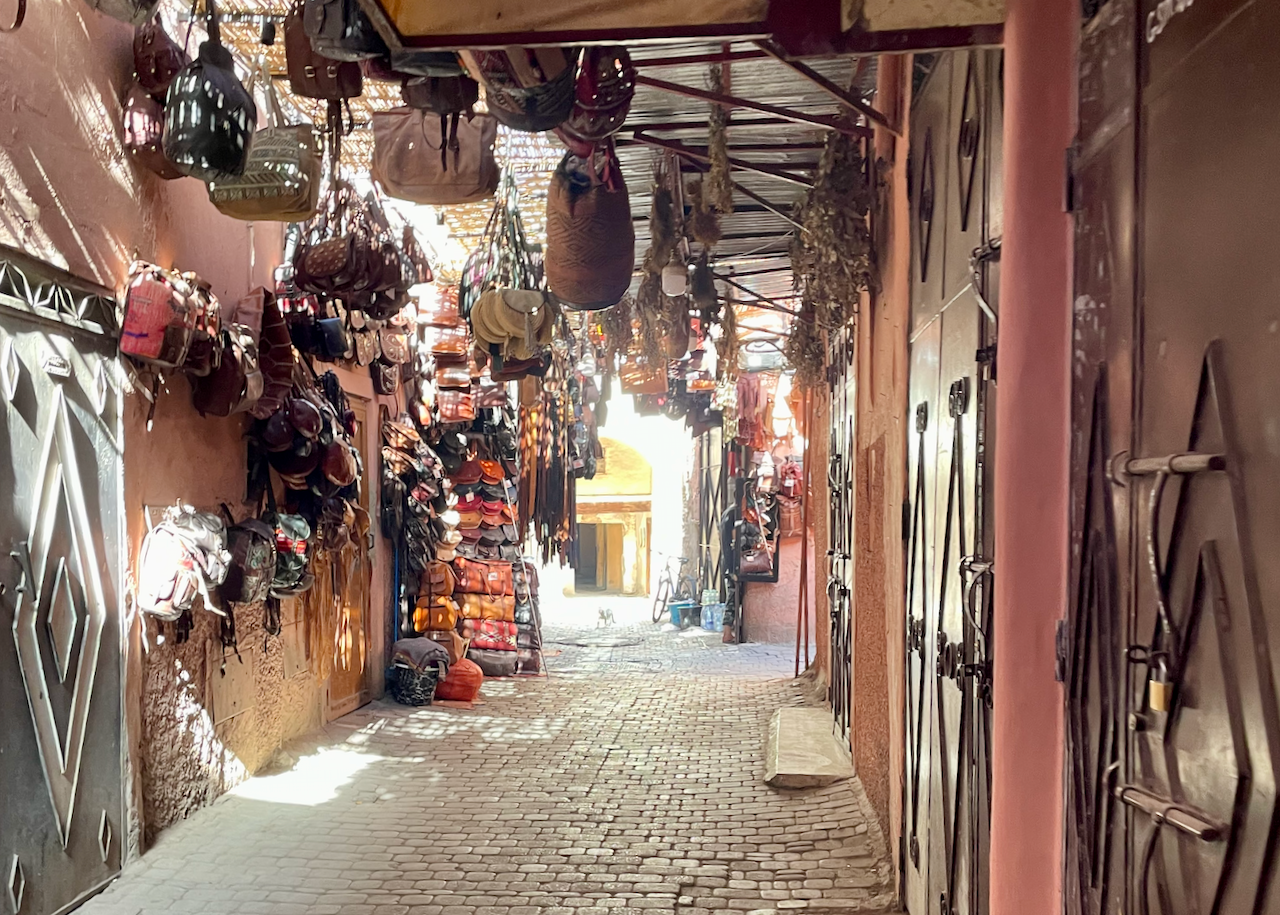
Morocco is dangerous for anyone who likes objects. We spent most of the day wandering the medina and somehow accumulated wall sconces, rugs, a painting, a backgammon set, pottery, jewelry, spices, and more stuff I’m probably forgetting.
That evening we went to the New Town to see what the nightlife looked like, based on recommendations from a few people we had met on gay social apps. The bar was pleasant enough, but nightlife was not the reason to come to Morocco. We were much happier back at the riad in the hot tub.
Day 6: Into the High Atlas
The next morning our two friends headed home and Steven and I started a three-day private overland trip from Marrakech through the Atlas Mountains and desert to Fes. This was the part of the itinerary where a good driver-guide mattered most. Hassan spent so many hours with us over those three days that by the end he felt less like a service provider and more like a friend we were getting to know better.
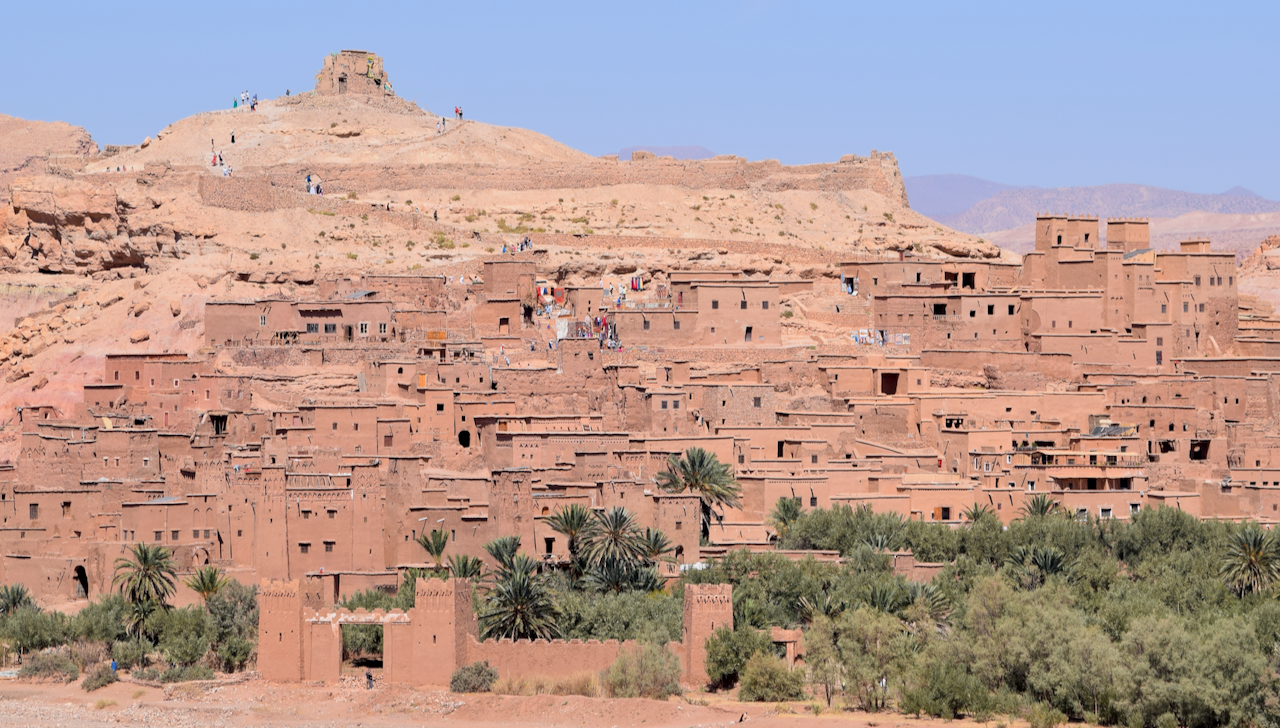
We crossed the Tizi n’Tichka pass and stopped at the UNESCO-listed Ksar of Aït-Ben-Haddou. If it looks familiar, that may be because its extraordinary earthen architecture has appeared in everything from Lawrence of Arabia to Game of Thrones. The oldest standing structures there are thought to date from the 17th century.
From there we stopped at an Amazigh rug shop and a women’s rose-oil cooperative, where we picked up lotions for our nieces, before ending the day in the Dadès Gorge. The twisting roads and huge rock formations made it one of my favorite landscapes of the whole trip.
Day 7: Erg Chebbi
We continued toward Merzouga, stopping along the way while Hassan explained one of the traditional underground irrigation systems used in the region and told us stories about helping dig the channels when he was younger.
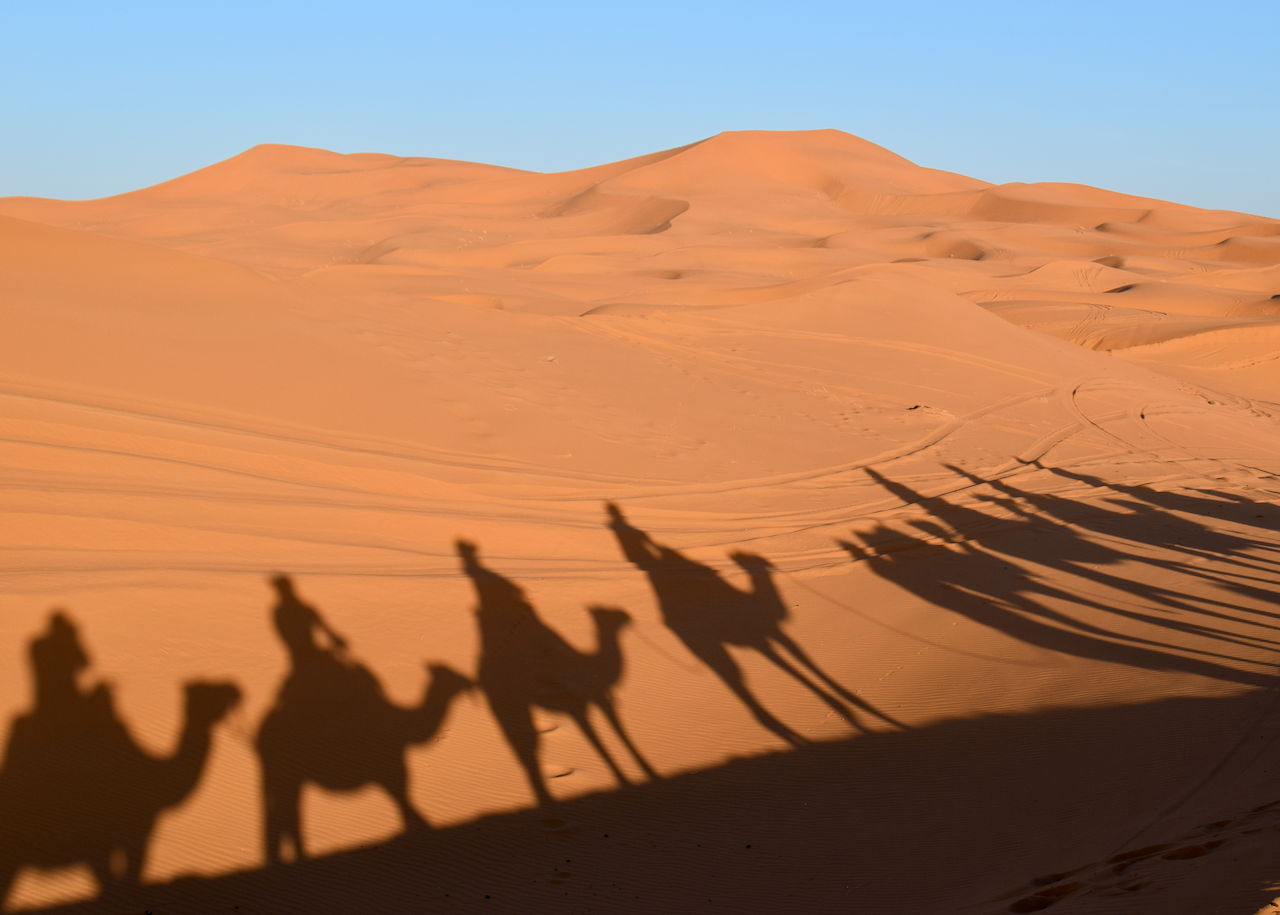
At Erg Chebbi, Hassan took our bags ahead while we made the final approach to the desert camp by camel. The camel ride was an experience but it was the night sky that I will remember forever.
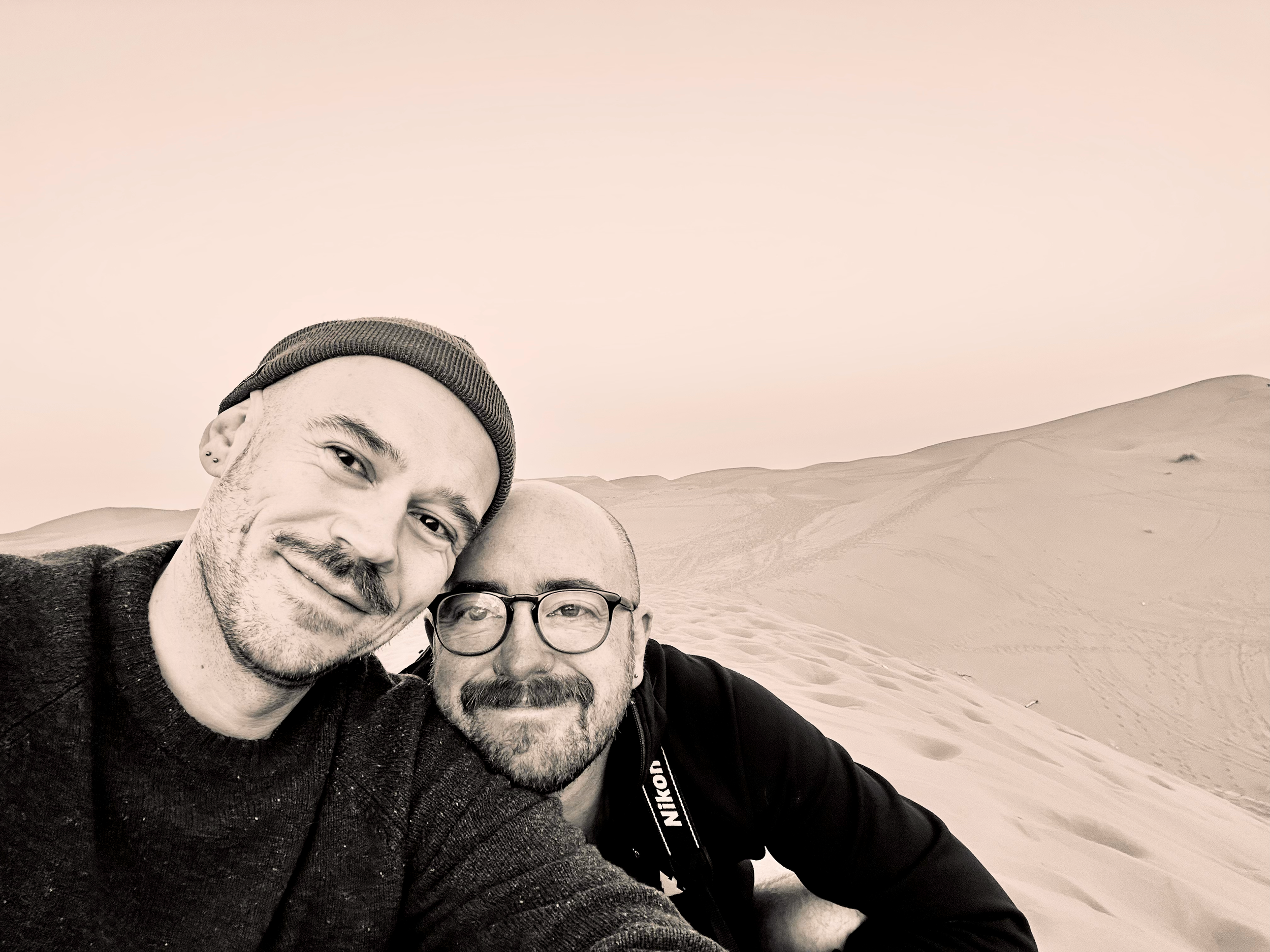
Steven and I climbed a dune after dark and sat there alone, without a visible trace of human-made light. I had never seen the sky look like that. It was quiet, enormous, and one of those travel moments that does not need improvement or embellishment after the fact.
Day 8: Desert to Fes
The final driving day was another lesson in how varied Morocco is. We left the dunes, passed through forests and mountain landscapes, and saw Barbary macaques near Ifrane before continuing to Fes.
This three-day overland section was a lot of driving. There is no point pretending otherwise. I still thought it was worth it because the landscapes changed constantly and sleeping at the edge of the Sahara was a true bucket list experience of the trip. With more time, I would slow it down. With eight days, the tradeoff was simply that we saw a remarkable amount of the country and spent a remarkable amount of time in a vehicle.
We said goodbye to Hassan, checked in at the Fes Marriott Jnan Palace, and made one last run into the medina for dinner and souvenirs before heading home.
A note for LGBTQ+ travelers
The question I get most often about this trip is not actually about the desert or the food. It is whether we felt comfortable traveling as gay men in Morocco.
Our experience was overwhelmingly positive. At the hotels, nobody blinked at Steven and me sharing a room with one bed. On one rural overnight though, we were offered twins and decided that was not the moment to turn the room configuration into an awkward discussion.
The one place where things became uncomfortable was a private riad rental in Marrakech. Because it was a private home rather than a hotel, there were some delicate conversations with the hosts and paperwork before we arrived — exactly the kind of pre-trip conversation I would rather not have had. I would not generalize that experience to every private rental, but it changed how I would plan the same trip now.
I would choose an established hotel or riad that is accustomed to international guests, or have a trusted local partner confirm the property’s comfort and policies before arrival. The goal is not to pretend Morocco works exactly like home. It is to remove avoidable uncertainty so you can spend your attention on the trip itself.
What I would carry forward
Eight days was enough to show us a lot of Morocco, but not enough to make this a template I would hand to everyone. The route worked because we were comfortable moving quickly, we genuinely wanted the desert leg, and we were willing to trade road time for variety.
The bigger lesson is still the one I took from the trip before I ever became an advisor: good planning does not have to make a trip rigid. Done well, it handles the parts that could create friction — transportation, accommodations, long transfers, the places where local knowledge matters — so the rest of the trip has room to surprise you.
That is what Morocco did for us. The pieces I remember most are not really the checklist items. They are Hassan’s stories, the absurd amount of shopping, the meals we found by wandering, the long road through the mountains, and sitting with Steven in complete darkness on top of a dune.
THINKING ABOUT MOROCCO?
Morocco rewards a trip that is specific about what matters to you: route, pace, local support, where you stay, and how much structure you actually want. If you are thinking about it — especially as an LGBTQ+ traveler — I can help sort out which parts need planning and which parts deserve room to unfold.
