
Is a repositioning cruise right for me?
Why an unusual one-way sailing can be a great value and a genuinely interesting trip — and the reasons it can also be the wrong cruise for you.
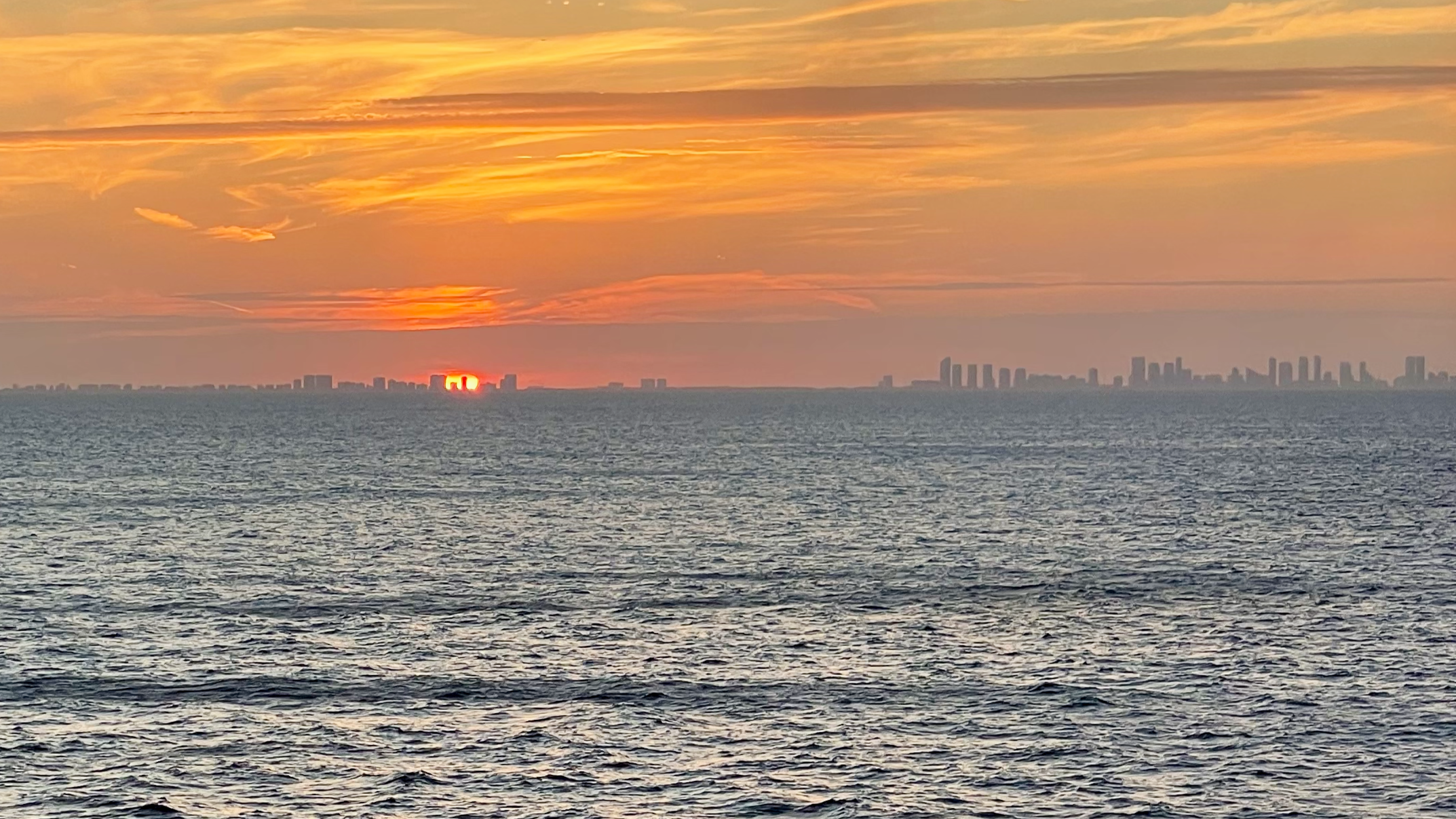
Waving goodbye to Miami — the last land we saw for eight days
I went into my first transatlantic repositioning cruise with one very specific concern: eight straight days at sea sounded like a lot.
The trip was a 14-night Virgin Voyages sailing on Scarlet Lady from Miami to the Mediterranean in spring 2024. We would cross the Atlantic before making stops in Madeira, Málaga, and Valencia. I already knew I liked Virgin; I was less sure how I would feel about making the ship itself such a large part of the trip.
I had my answer before we reached Europe: I booked another transatlantic crossing while I was still aboard the first one.
That does not mean a repositioning cruise is automatically a good idea. It does mean I think they deserve a closer look than “two weeks on a ship” might suggest.
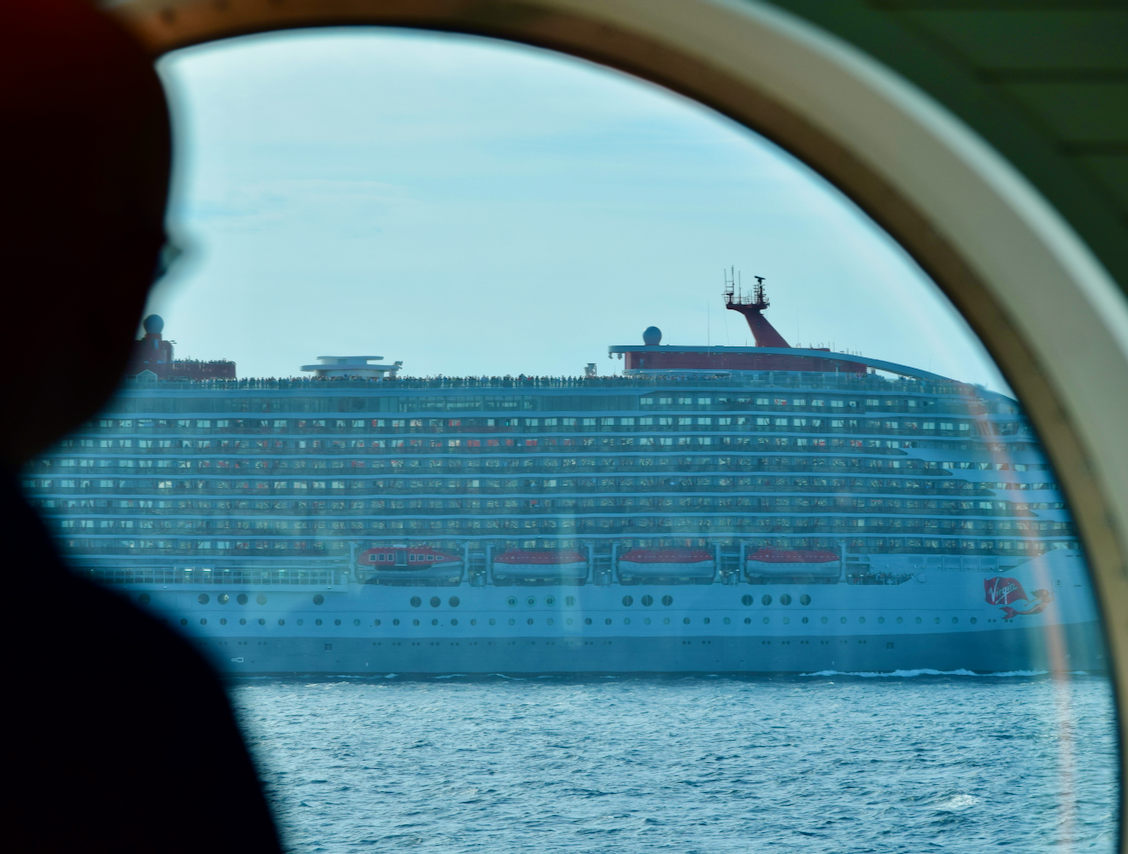
What exactly is a repositioning cruise?
Cruise lines move ships between regions as seasons change. A ship might spend winter in the Caribbean and summer in Europe, for example, which means at some point it has to get from one to the other. Rather than sail empty, cruise lines sell those one-way voyages as repositioning cruises.
The result is usually a longer itinerary, fewer ports, and more sea days than you would see on a typical weeklong cruise. Transatlantic crossings are the obvious example, but ships also reposition between places like Europe and the Middle East, Alaska and Asia, or across the Pacific.
That changes the center of gravity of the trip. On a port-heavy sailing, the ship can function partly as transportation and hotel. On a repositioning cruise, the ship needs to be somewhere you genuinely want to spend time.
The ship matters more than usual.
This is the biggest lesson I would carry forward when helping someone choose one of these trips: if you have a lot of sea days, you should really like the line and the ship.
Virgin works particularly well for me because I like the adults-only environment, the queer-friendly social mix I have found aboard, the food, and the fact that the ships feel lively without feeling enormous. But that is a fit question, not a universal recommendation. Two weeks on the wrong ship would feel very different.
The longer sailing also magnifies details that can seem secondary on a shorter cruise. Do you actually like the dining options enough to eat there again and again? Is your cabin somewhere you are happy to spend a slow afternoon? Does the ship have enough going on when you want activity, and enough quiet places when you do not?
A repositioning cruise is a bad time to choose a ship because the price looked good and hope the rest sorts itself out.
Will I get cabin fever?
I did not. The long run of sea days actually became one of my favorite parts.
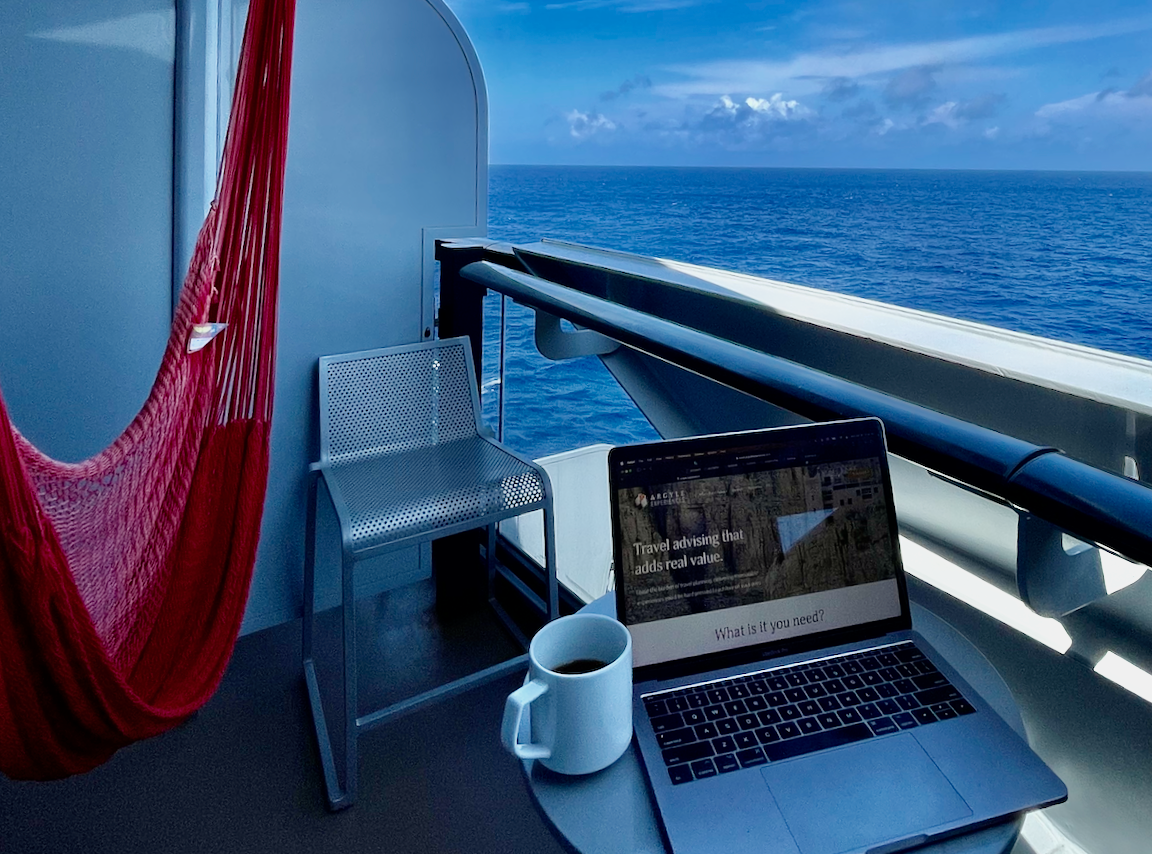
Part of that was having enough options without feeling as though I needed to do everything. I could spend a morning in the hammock on my balcony, join something social, see a show, wander into an activity, or do absolutely nothing. We took a behind-the-scenes ship tour, which scratched my travel-nerd itch, and I spent a few hours getting a tattoo at the onboard studio — admittedly not a standard shore excursion.
I also liked developing a routine. Most mornings started with coffee and some email before I decided what kind of day I wanted. That small amount of structure made the ship start to feel less like a venue I was visiting and more like a place I temporarily lived.
And yes, I worked. On that 2024 crossing, the internet was good enough that I could keep up with clients and even do a Zoom consultation from the middle of the North Atlantic. I would not promise that level of connectivity on every ship, route, or fare — at-sea Wi-Fi varies and some lines now tier their internet plans — but for someone who likes combining a long trip with a little light work, sea days can be surprisingly useful.

The ports still matter — maybe more.
Having fewer port calls did not make them feel less important. It made me think more carefully about what I wanted from them.
After eight days crossing the Atlantic, stepping onto Madeira felt fantastic. We went hiking, which was exactly the physical reset I wanted after so much time aboard. Málaga gave us another chance to get moving (we walked the Caminito del Rey), and Valencia added a very different city day before the sailing ended.
That balance matters. If you are looking at a repositioning itinerary, I would pay attention not just to how many ports it has, but to where they fall. A long sea stretch followed by two or three places you are genuinely excited about can be great. A long sea stretch followed by ports you do not particularly care about is a different proposition.
It is also worth thinking about the trip around the cruise. Because these sailings begin and end in different places, the airfare is inherently one-way or open-jaw, and the embarkation or disembarkation city may be worth turning into a few additional days on land.
Direction matters more than I expected.
On our west-to-east Atlantic crossing, we gradually moved the clocks forward as we changed time zones. Nobody ruined my vacation by taking away an hour here and there, but I noticed it.
If everything else were equal, I would choose an east-to-west crossing next time. Gaining hours as you travel is simply more pleasant than giving them up.
The season matters too. Repositioning cruises tend to happen in shoulder seasons because that is when ships are moving between their seasonal homes. That can mean pleasant temperatures and less oppressive heat, but it also means weather is part of the calculus. An ocean crossing is not where I would build a trip around guaranteed pool weather.
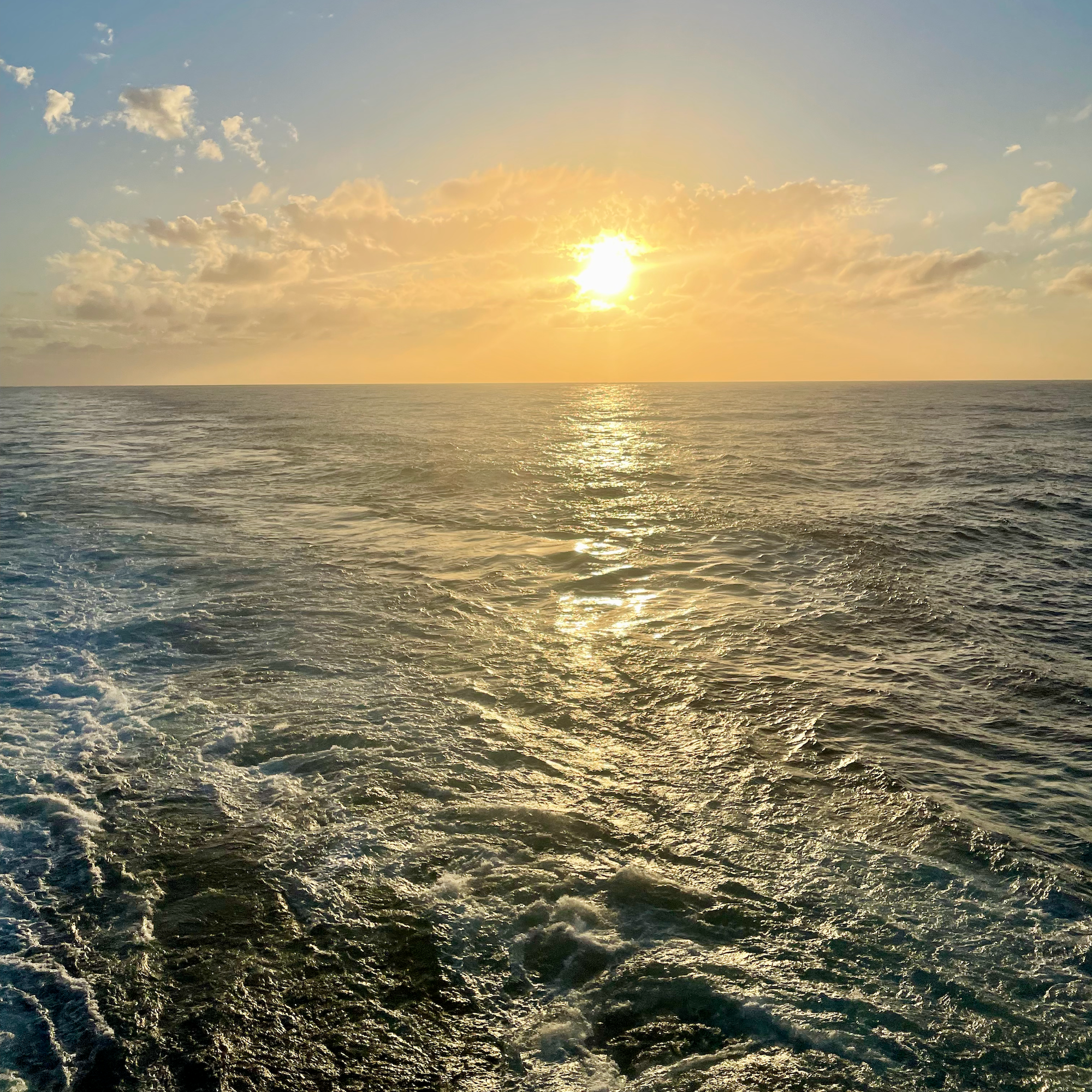
Who is this kind of cruise actually for?
I would look seriously at a repositioning cruise if you like sea days, enjoy settling into a ship rather than constantly rushing off it, and want a trip with a slower rhythm. It can also work especially well if you have enough flexibility for a longer vacation or if being lightly connected to work lets you travel for more days than you otherwise could.
I would be more cautious if the main reason you cruise is to wake up somewhere new almost every morning, if you get restless without lots of time on land, or if you are not yet confident that the ship itself is a good match. A 12- or 14-night crossing is a fairly committed way to discover that you chose the wrong cruise line.
The social side surprised me too. Spending that much time with the same people created more of a temporary community than I had experienced on shorter sailings. Some of the people we met on that crossing are people I still keep in touch with. I would not assume every repositioning cruise produces that exact chemistry, but the extra time aboard gives it room to happen.
For me, that was the real appeal. The crossing was not dead time between Miami and Europe. The crossing was the trip.
THINKING ABOUT A LONGER OR UNUSUAL SAILING?
“Cruise” is about as specific as “hotel.” The right ship, itinerary, sea-day rhythm, and surrounding travel all matter. I can help figure out whether a repositioning cruise — or a completely different kind of sailing — fits what you want the trip to feel like.
